

How to Store Pasteurized Milk Safely at Home
Milk is part of everyday life in many Pakistani homes. It goes into morning tea, breakfast cereal, homemade desserts, and countless family recipes. Yet even a good-quality pack can spoil early when it is left on the counter or stored in a refrigerator that is not cold enough. Knowing how to store pasteurized milk correctly helps protect freshness, reduce waste, and support safer food habits.
Whether you have just brought home a one-litre pack of Pak Dairy Pasteurized Milk or opened one for breakfast, a few practical steps can make a difference. This guide explains storage temperatures, handling after opening, common mistakes, and the signs that milk should be discarded.
What Is Pasteurized Milk?
Pasteurization is a controlled heating process that reduces harmful microorganisms in milk. It makes milk safer to drink, but it does not make ordinary refrigerated milk shelf-stable. Bacteria can still enter after opening, and surviving microorganisms can grow if milk becomes too warm.
That is why pasteurized milk belongs in the refrigerator unless its specific packaging clearly states otherwise. Pak Dairy Pasteurized Milk is a convenient choice for tea, coffee, cereal, cooking, and everyday drinking; correct handling at home remains essential.
Why Proper Pasteurized Milk Storage Matters
Freshness depends on more than the date printed on a pack. Time, temperature, hygiene, and the condition of the packaging all play a role. Storing milk correctly helps you:
Maintain its expected taste and texture.
Limit the growth of microorganisms that cause spoilage.
Reduce unnecessary food waste.
Keep a reliable supply ready for daily meals.
A refrigerator that feels cool is not necessarily cold enough. Checking its actual temperature is one of the simplest improvements a household can make. For additional food-safety advice, see the FDA food storage guidance.
How to Store Pasteurized Milk: The Essential Steps

1. Keep Your Refrigerator at 4°C or Below
For safe refrigerated storage, keep the fridge at 4°C (40°F) or colder. Use a refrigerator thermometer rather than guessing from the control dial. Check it regularly, especially during hot weather or when the refrigerator is packed with groceries.
Avoid overcrowding shelves, because chilled air needs room to circulate. Keep the fridge door closed whenever possible to limit temperature changes.
2. Refrigerate Milk Soon After Buying It
Make milk one of the first groceries you put away. If you have a long journey home in Lahore’s summer heat, carry it in an insulated cooler with ice packs. Do not leave the pack in a parked car while completing other errands.
As a food-safety rule, refrigerated perishables should not remain above safe refrigeration temperatures for more than two hours, or one hour when the surrounding temperature exceeds 32°C (90°F). If the limit is exceeded, discard the milk rather than trying to rescue it by chilling it again.
3. Choose an Inner Refrigerator Shelf
A middle or lower inner shelf usually has steadier temperatures than the refrigerator door, which warms each time it opens. Set the pack upright on a clean shelf, away from raw meat drips and spills.
Do not push it against the back wall if that area freezes food. Partly frozen milk can separate and change texture when thawed. The goal is consistent refrigeration, not accidental freezing.
4. Handle the Pack Carefully After Opening
Wash your hands before handling food, pour the amount you need, and return the remaining milk to the refrigerator promptly. If the original pack cannot be securely closed, transfer milk to a thoroughly cleaned, food-safe, covered container.
Never drink directly from the pack or return unused milk from a cup to the original container. Both habits can introduce contaminants and shorten the usable life of the remaining milk.
5. Follow the Printed Date and Storage Directions
Read the manufacturer’s storage instructions and date marking before opening the packet. The exact usable period depends on the product, the date type, and how consistently it has stayed cold.
After opening, use milk promptly and follow any printed after-opening instructions. Do not assume that every pasteurized milk brand stays fresh for the same number of days. If a pack is leaking, swollen, or damaged, do not use it.
Common Mistakes That Make Milk Spoil Faster
Small habits often cause avoidable problems. Here are mistakes worth correcting:
Leaving milk out during breakfast: Pour what you need and return the pack to the fridge.
Storing milk in the door: Move it to an inner shelf with a more stable temperature.
Using a dirty jug or spoon: Wash and dry food-contact items before use.
Ignoring power cuts: Check temperatures after a prolonged outage instead of assuming the milk is safe.
Mixing old and new milk: Keep batches separate and use older, safely stored milk first.
These steps are especially useful in households where several people use the same pack throughout the day.
How Can You Tell if Pasteurized Milk Has Spoiled?
Sour odors, unusual lumps, curdling, discoloration, or a swollen package are warning signs. Discard milk with any of these changes. However, harmful bacteria may be present without a noticeable smell or appearance, so a normal look does not prove that improperly stored milk is safe.
Never taste suspicious milk to test it. When you do not know how long it has been warm, throwing it away is safer than taking a chance.
What About Milk During a Power Cut?
Keep the refrigerator door closed as much as possible. A closed refrigerator can generally keep food cold for around four hours during a power outage, but the actual result depends on its starting temperature and how often the door is opened.
Use a thermometer to assess the refrigerator and milk. Discard refrigerated perishables that have been above 4°C for four hours or more, or whenever their safety is uncertain. Moving the milk into a properly chilled cooler early may help if an extended outage is expected.
Everyday Ways to Enjoy Properly Stored Milk
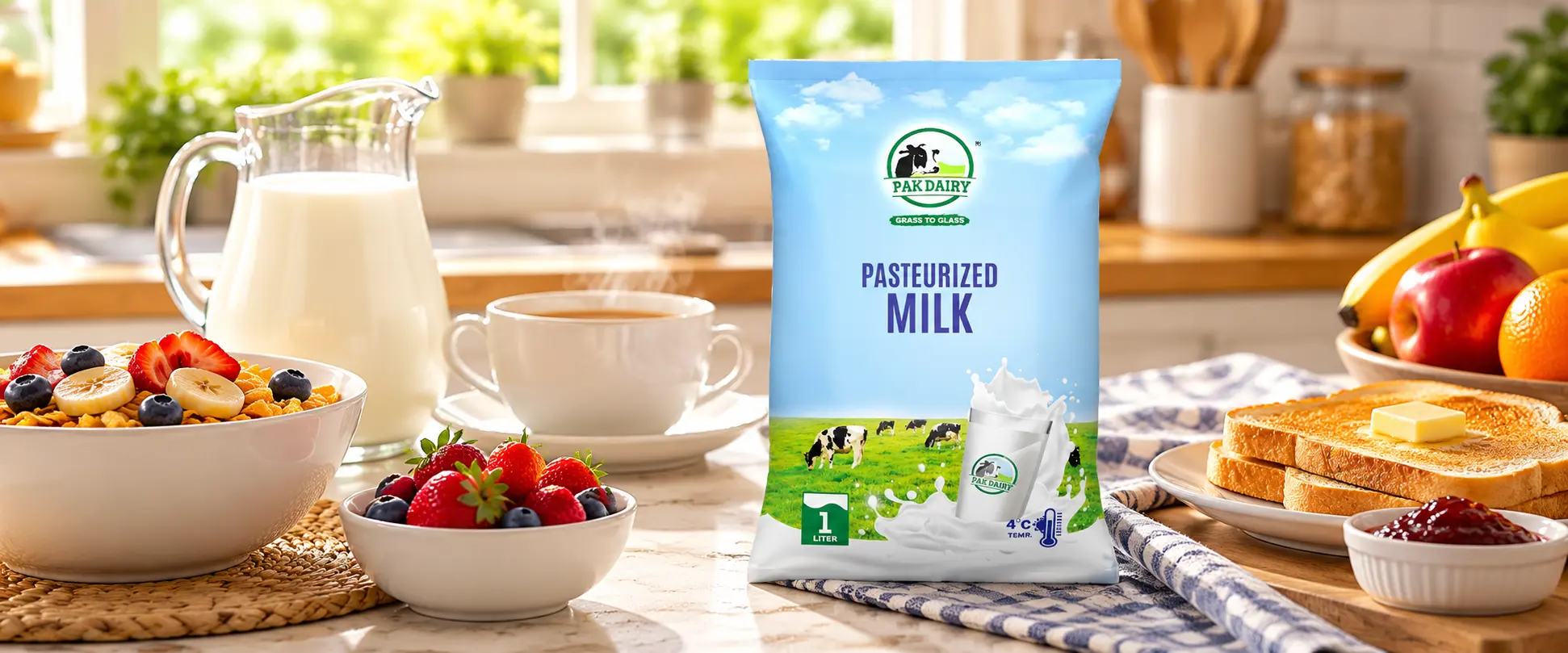
With good storage habits, pasteurized milk is ready whenever your family needs it. Add it to morning tea, pour it over cereal, make a smoothie, prepare homemade custard, or use it in savoury sauces. Avoid leaving milk-based dishes at room temperature for extended periods, and refrigerate leftovers promptly.
Explore the Pak Dairy dairy products range for fresh milk, yogurt, butter, and more. You can also find your nearest Pak Dairy branch to plan a convenient purchase.
Frequently Asked Questions
Can pasteurized milk stay out of the fridge overnight?
No. Ordinary refrigerated pasteurized milk left out overnight should be discarded, even if it still smells normal.
What is the best temperature for storing pasteurized milk?
Keep milk in a refrigerator at 4°C (40°F) or below, and check the temperature with a thermometer.
Is the fridge door a good place for milk?
An inner shelf is generally better because its temperature is less affected by frequent door opening.
Can I drink pasteurized milk after its expiry date?
Follow the pack’s date and storage instructions. Do not rely on smell or taste to decide whether improperly stored or expired milk is safe.
Final Thoughts: Keep Your Milk Fresh and Safe
Learning how to store pasteurized milk does not require complicated equipment. Keep it consistently chilled, handle it with clean utensils, respect the label instructions, and return it to the fridge after each use. These simple practices support freshness and food safety for the whole household.
For everyday dairy needs, explore Pak Dairy Pasteurized Milk and other dairy products or visit a Pak Dairy shop in Lahore.




2 Comments
The point about not judging milk only by its smell really stood out to me. I’ve done that before when a pack was left out after breakfast, and this made me realize it isn’t a reliable check. I usually buy milk on the way home from other errands, so taking a cooler in summer is a practical suggestion. I’ll also move the pack from the fridge door to a shelf. Could you share a simple way to check fridge temperature if someone doesn’t already have a thermometer? That would help a lot during warmer months.
I keep our milk in the fridge door most of the time, so the advice about moving it to an inner shelf was honestly new to me. It makes sense once you think about how often the door opens, especially in a busy house. I also liked the reminder to put the pack away as soon as we get home instead of leaving it with the rest of the shopping. Power cuts are pretty common here, so the section on checking the temperature was useful. A quick chart for power cut situations would be handy.