How to Use Desi Ghee: 7 Amazing Pakistani Cooking Tips
From a crisp breakfast paratha to a comforting bowl of daal, desi ghee has a familiar place in Pakistani home cooking. Its golden colour, distinctive aroma and rich taste can make simple recipes feel special. But knowing **how to use desi ghee** well is about more than adding extra fat: a little, used at the right moment, can provide plenty of flavour.
In this practical guide, discover seven easy ways to use Pak Dairy Desi Ghee in everyday Pakistani dishes. You will also learn when to add it, how to avoid burning it and how to store it properly. Whether you cook daily or only on weekends, these ideas are simple enough to try at home.
Practical Ways to Use Desi Ghee in Everyday Pakistani Meals
Learning how to use desi ghee in everyday Pakistani cooking can help you bring traditional flavour and a rich aroma to your favourite homemade dishes. Desi ghee is especially popular in Pakistani kitchens because it works well with breakfast items, curries, rice dishes, and traditional recipes. If you are wondering how to use desi ghee for breakfast, start by adding a small amount to the pan while preparing parathas, omelettes, or homemade halwa. Its distinctive taste can enhance simple meals without requiring complicated ingredients. Another excellent example of how to use desi ghee is adding a small spoonful to freshly cooked daal, vegetable curry, or steamed rice just before serving. This finishing touch creates a delicious aroma and adds richness to the meal. For consistent cooking results, use an appropriate quantity according to your recipe and personal preference. Choosing quality desi ghee, such as Pak Dairy Desi Ghee, can help you enjoy the authentic taste of traditional Pakistani food.
How to Use Desi Ghee & Why Use it in Pakistani Cooking?
Desi ghee is clarified butterfat with a rich, buttery character. It is used in traditional South Asian kitchens for sautéing, finishing and adding aroma to savoury and sweet dishes. Because its flavour is noticeable, you often need only a small quantity.
The goal is to match the amount to the recipe, not to pour it into everything. For an everyday meal, try measuring a teaspoon instead of adding it straight from the container. A controlled amount can bring warm flavour to familiar foods without making them feel greasy.
7 Easy Ways to Use Desi Ghee in Everyday Pakistani Cooking
1. Make Golden, Crispy Breakfast Parathas
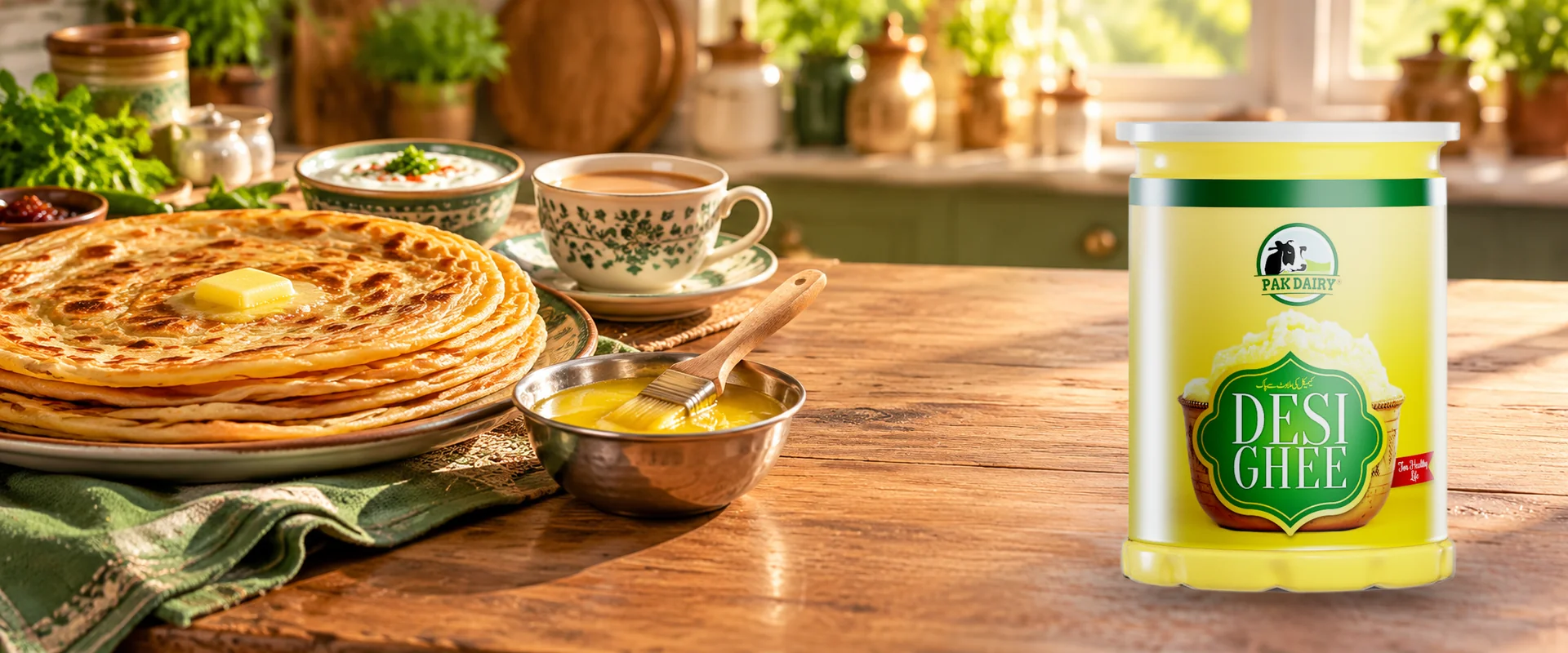
One of the most satisfying ways to use desi ghee is on a homemade paratha. Roll out your dough, place it on a preheated tawa and cook until small golden spots appear. Lightly brush one side with about half a teaspoon of ghee, turn, and cook the other side. Add a little more only if needed for an even finish.
Use medium heat so the layers crisp without burning. Serve with omelette, plain yogurt or a cup of chai. This simple **desi ghee for paratha** technique adds a traditional aroma while helping you control the total quantity.
2. Add a Fragrant Desi Ghee Tadka to Daal
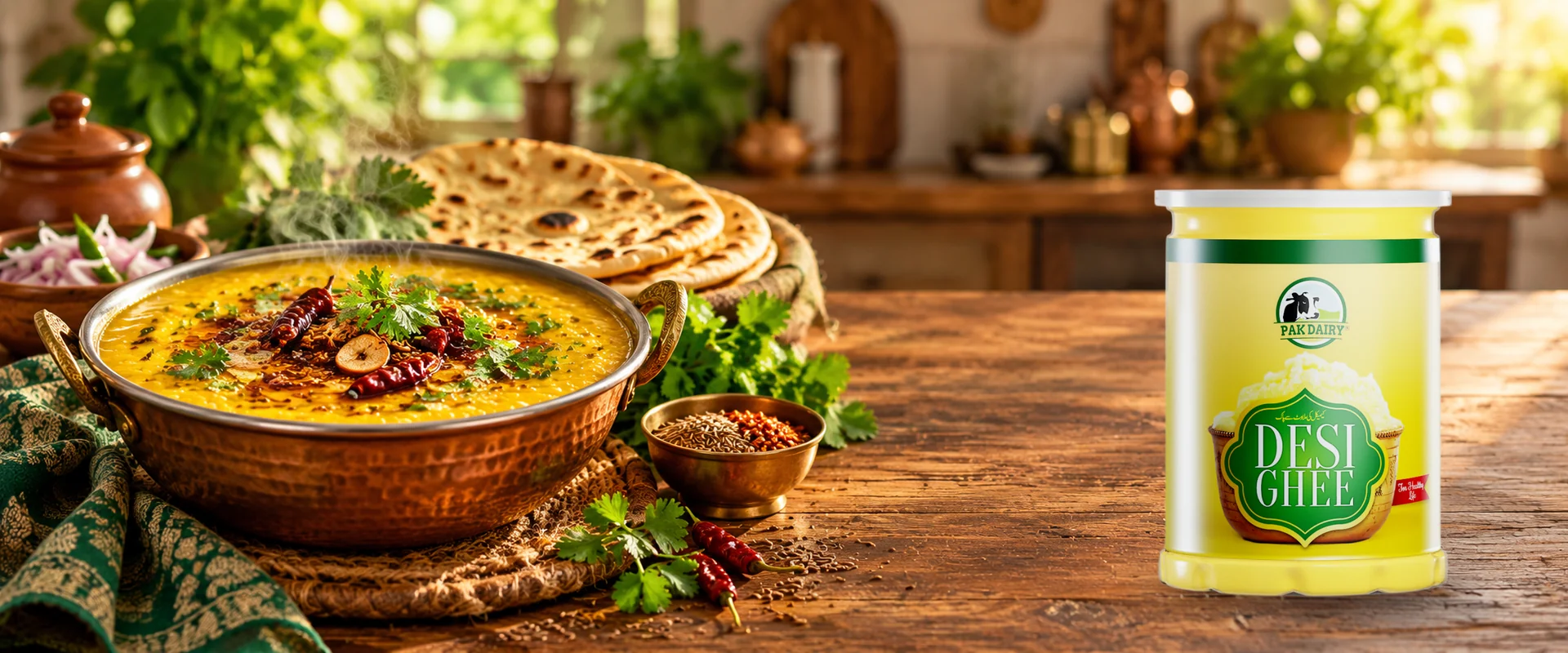
A finishing tadka can turn a basic lentil dish into a comforting family favourite. Cook your masoor, moong or chana daal as usual. In a small pan, warm one to two teaspoons of ghee over low-to-medium heat. Add cumin seeds, sliced garlic and a small dried red chilli, then stir just until fragrant.
Pour the sizzling mixture over the cooked daal and cover briefly to capture the aroma. Do not allow the garlic to become dark brown: burnt garlic tastes bitter. Serve with roti or rice. This **desi ghee tadka** technique works especially well when the lentils are mildly seasoned.
3. Finish Biryani and Pulao with Extra Aroma
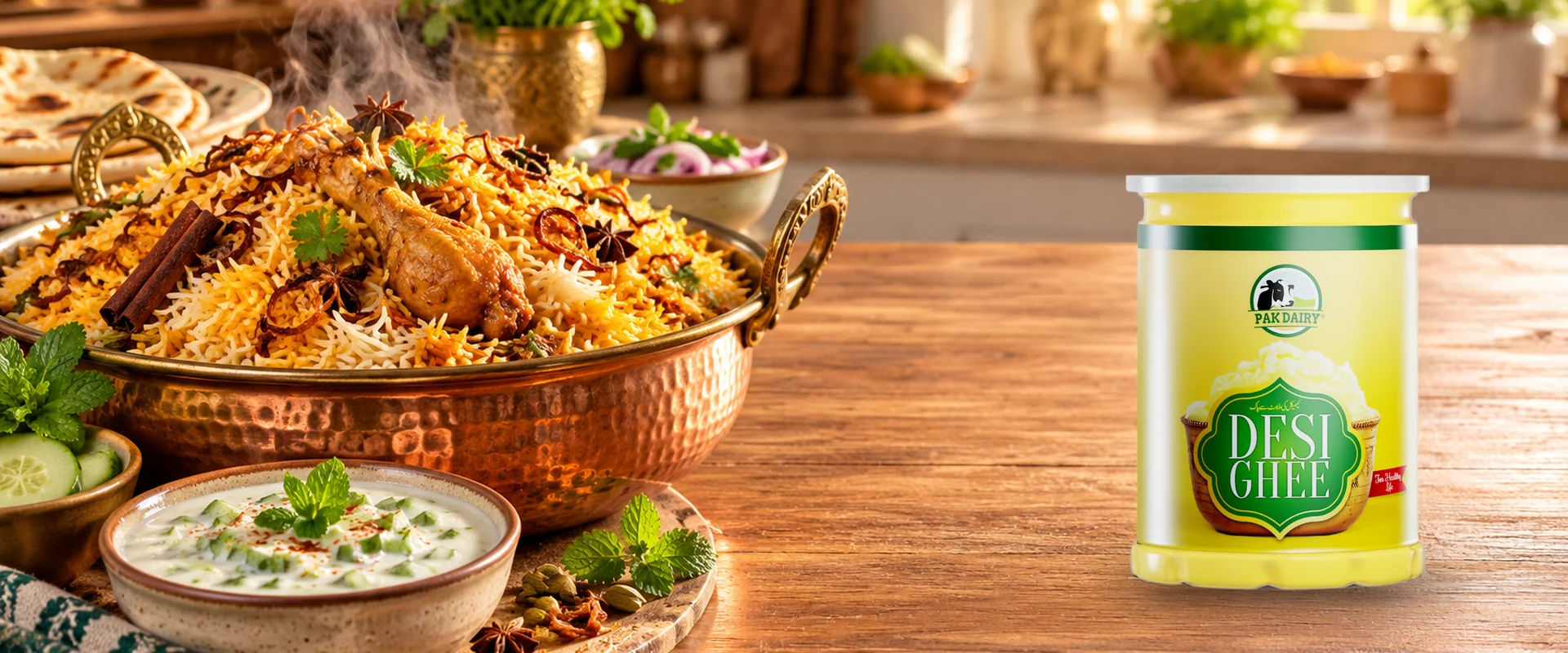
Biryani and pulao already contain layers of spices, rice and savoury ingredients. A modest amount of ghee can complement those flavours near the end of cooking. For a family-sized pot, drizzle a measured teaspoon or two over the rice before the final covered steaming stage, adjusting to the quantity and other fats already in the recipe.
Avoid adding too much, which may make rice heavy or oily. Gently fluff with a fork rather than stirring aggressively. Serve with cucumber raita and salad. For a lighter weeknight meal, use just a few drops to finish plain zeera rice.
4. Bring Traditional Richness to Suji Halwa
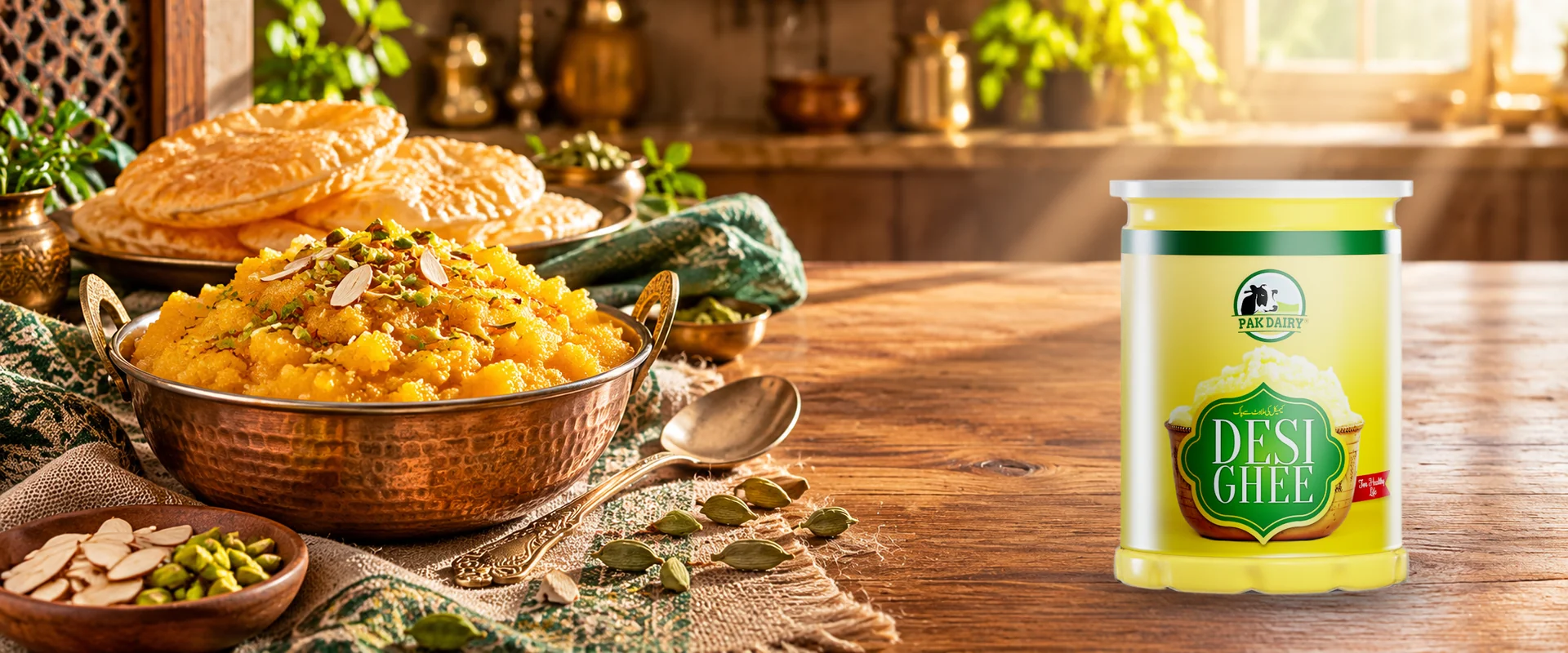
Suji halwa is a beloved dessert for family breakfasts and celebrations. Warm a measured amount of ghee in a pan, then add semolina and stir gently until it smells toasted and turns lightly golden. Add your prepared sweet liquid carefully and continue stirring until the halwa thickens. Finish with cardamom and a small sprinkle of almonds or pistachios.
The key is patience rather than high heat. Semolina can brown unevenly if the pan becomes too hot. Follow your chosen recipe’s fat-to-semolina proportion, and make small portions when cooking for a few people. Pak Dairy Desi Ghee brings a familiar buttery note to this comforting dessert.
5. Brush Warm Chapati or Roti for a Soft Finish
You do not need to fry bread to enjoy ghee’s flavour. Make chapati or roti on the tawa as usual. Once cooked, lightly brush the warm surface with a few drops of melted ghee. Fold and serve immediately so the bread stays soft and aromatic.
This method is particularly useful with simple dishes such as aloo sabzi, daal or homemade vegetable curry. It gives a little richness at the table without requiring the whole dough to be made with ghee. For larger family meals, keep the brush and ghee separate so everyone can choose their preferred amount.
6. Enhance Kheer and Festive Sweet Dishes
Desi ghee can also add a toasted flavour to traditional desserts. For kheer, warm a few chopped nuts in a small amount of ghee until lightly fragrant, then spoon them over individual servings. You can use the same idea for homemade panjeeri or other festive sweets where roasted flour, nuts or semolina are part of the recipe.
Start with a small amount, taste and adjust rather than assuming more will improve the dish. Pairing fragrant ghee with cardamom, cinnamon or nuts creates a pleasant combination. Keep serving sizes sensible, especially with desserts that also contain added sugar.
7. Sauté Everyday Vegetables with a Spoonful
Simple vegetables such as potatoes, peas, carrots and cauliflower can benefit from a light ghee finish. Cook the vegetables with your usual spices and preferred cooking oil, if needed. Towards the end, add half a teaspoon of ghee and toss gently so its aroma spreads through the dish.
Alternatively, warm a measured teaspoon in a small pan with cumin and add it to cooked sabzi. This is an easy approach when you want the taste of ghee without using it for the entire cooking process. Finish with fresh coriander and serve with chapati for a convenient weekday meal.
Make Traditional Pakistani Recipes More Flavourful with Desi Ghee
Understanding how to use desi ghee in traditional Pakistani recipes allows you to experiment with different cooking techniques while maintaining the authentic character of homemade food. Desi ghee can be used when sautéing onions, preparing aromatic spices, or finishing popular dishes such as chicken karahi, pulao, and daal. For people interested in learning how to use desi ghee in desserts, traditional Pakistani sweets offer excellent opportunities. A carefully measured amount can add richness to suji halwa, homemade panjiri, and other festive treats. Desi ghee also works beautifully when brushed lightly over freshly prepared chapati or paratha before serving. Once you understand how to use desi ghee with suitable cooking temperatures and portions, it becomes easier to include this traditional ingredient in your regular meals. Pak Dairy Desi Ghee offers a convenient option for families who appreciate classic Pakistani flavours. Store it in a clean, tightly closed container according to the product instructions to help maintain its freshness and quality.
Practical Desi Ghee Cooking Tips
Good results often come from simple habits:
**Use medium heat when possible.** Ghee can become unpleasant if overheated; reduce the heat if it starts smoking.
**Measure before adding.** A teaspoon makes it easier to control richness across several dishes.
**Finish at the right moment.** Stirring a small amount into cooked food often provides more noticeable aroma than using a large amount early.
**Keep flavours balanced.** Cumin, garlic, cardamom and fresh herbs pair naturally with ghee.
**Avoid repeated overheating.** Do not continually reuse fat that has been heated until degraded or smoky.
Try one technique at a time and compare the aroma, texture and taste of the finished dish.
Is Desi Ghee Suitable for Everyday Cooking?
Desi ghee can be enjoyed for flavour as part of an overall balanced eating pattern, but it is rich in saturated fat. For heart health, the American Heart Association recommends limiting saturated fat and choosing more unsaturated fats, such as olive or canola oil, more often. Use ghee in modest amounts rather than treating it as a health supplement or unlimited cooking fat. Learn more from the American Heart Association’s guidance on saturated fats
https://www.heart.org/en/healthy-living/healthy-eating/eat-smart/fats/saturated-fats.
How to Store Desi Ghee Properly
Keep the jar tightly closed, away from direct sunlight, moisture and the heat of your stove. Always use a clean, completely dry spoon; water or food crumbs can affect quality. Follow the storage directions and best-before date printed on the Pak Dairy pack. If you notice an unusual odour, visible contamination or other unexpected changes, do not use it.
Frequently Asked Questions (FAQs)
1-Can I use desi ghee for both savoury food and desserts?
Yes. It works in small amounts for parathas, lentils, rice, vegetables, halwa and sweet garnishes. Adjust quantities to the recipe and your family’s taste.
2-When should I add desi ghee to daal?
For a fragrant finish, prepare a quick cumin-and-garlic tadka separately and pour it over the cooked lentils just before serving.
3-Can I use desi ghee on chapati without frying it?
Yes. A few drops brushed onto warm, cooked chapati can add aroma without frying the bread again.
4-Do I have to refrigerate desi ghee?
Storage needs depend on packaging, climate and the producer’s guidance. Follow the specific instructions on the jar, keep it sealed and prevent moisture contamination.
Bring Traditional Flavour to Your Kitchen
Now you know **how to use desi ghee** in seven practical ways, from breakfast parathas and daal tadka to rice, vegetables and desserts. Choose the dish your family enjoys most and begin with a small, measured quantity.




2 Comments
My mother always used a little desi ghee on fresh parathas, so that part of the post brought back a familiar kitchen memory. I liked that you included everyday dishes like daal and vegetables alongside desserts, because I rarely know where else to use it. The bit about medium heat was helpful too; I sometimes let the pan get too hot when I’m in a hurry. I might try the cumin and garlic tadka this week. Would you add it just before serving, or can it sit for a while?
I usually make daal on weekends, and the tadka idea caught my attention right away. I tend to add too much ghee while cooking, so the suggestion to use a small amount at the end actually makes sense for me. Brushing a little on chapati is another easy one I can try without changing the whole meal. I also hadn’t thought about keeping the spoon completely dry before putting it back in the jar. Thanks for including that storage tip. Do you think the same finishing method works well with khichdi?